

Dynamis technology is focused on carbon reduction. Our roadmap is built around three main pillars:
- A – Alternative Fuels
- B – Blended Cement – Calcined Clay
- C – Carbon Neutrality
These three topics are not isolated solutions. They are integrated technologies, already proven in industrial operation and designed to provide a mandatory pathway towards carbon neutrality in the cement industry.
A – ALTERNATIVE FUELS
It Is All About Gasification
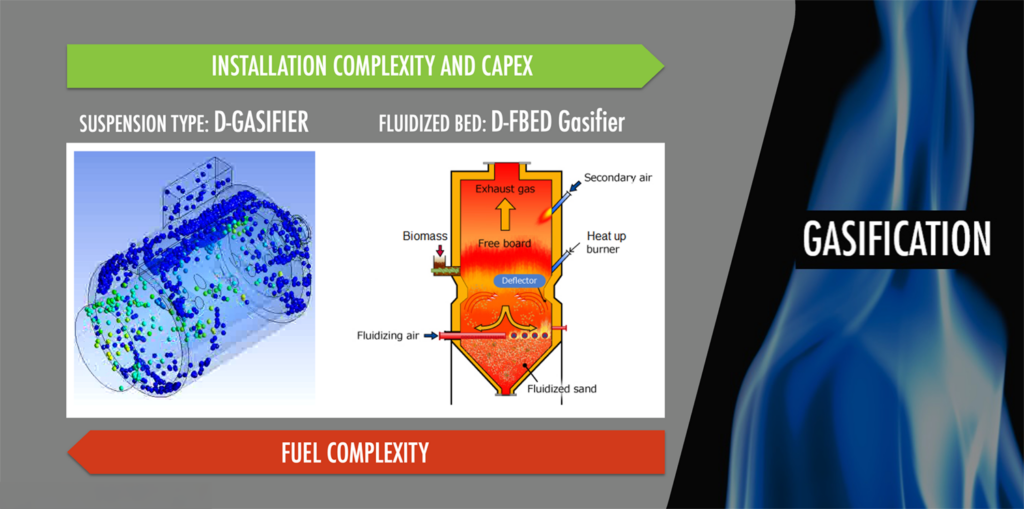
Gasification is the process behind most of the technologies presented by Dynamis. Within our portfolio, we have two types of gasifiers:
- D-Gasifier – Suspension type gasifier
- D-FBed Gasifier – Fluidized Bed Gasifier
The D‑Gasifier AFR Pro
For years the D‑Gasifier has been synonymous with reliable combustion in demanding thermal processes — from low‑temperature calcined‑clay operations to conventional oil‑ and gas‑fired applications. Its most common uses include petcoke burners in calcined‑clay plants and hot gas generators.
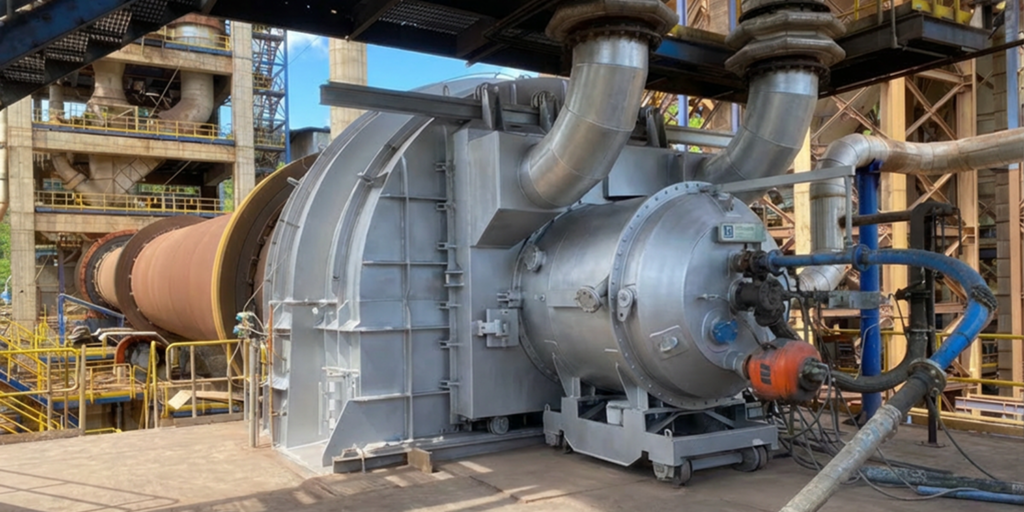
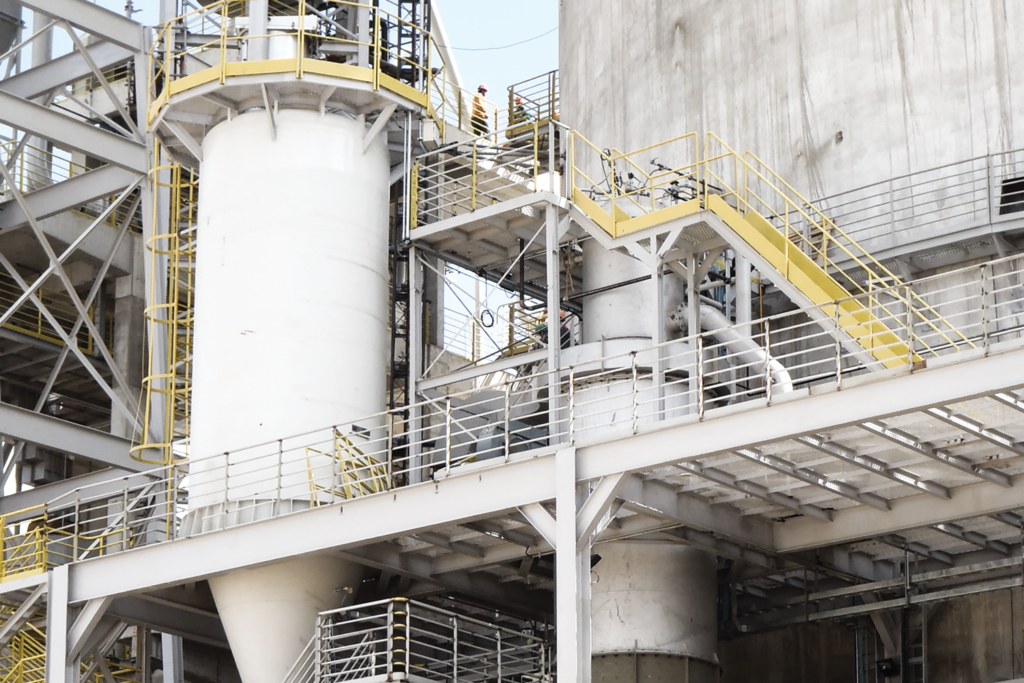
D-Gasifier Application on a Calcined Clay Rotary Kiln and as Hot Gas Generator (HGG)
Nowadays, the D-Gasifier AFR Pro – representing the 3rd generation of D-Gasifiers – focuses on alternative fuels, as RDF and biomass.
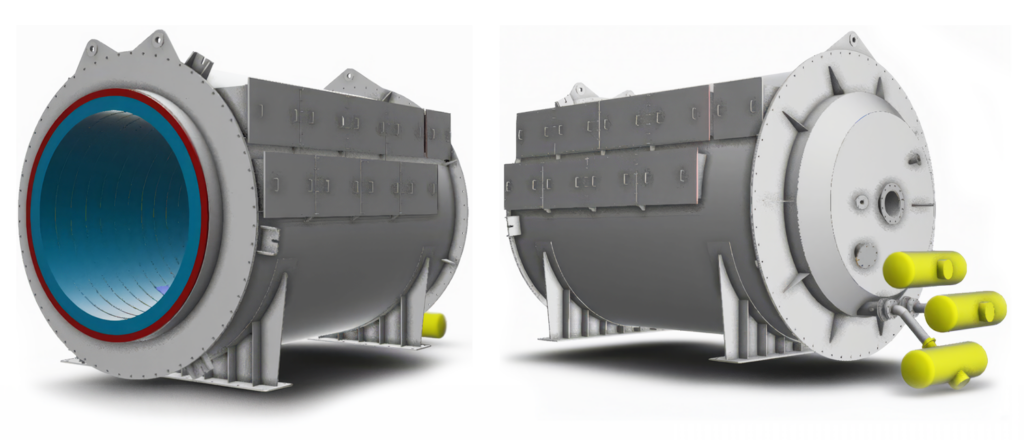
D-Gasifier AFR Pro design
The equipment has already been delivered as solution for several different plant operations based on calcined clay or clinker, reaching 100% of TSR (thermal substitution rate), reducing CO2 emissions and fuels costs.
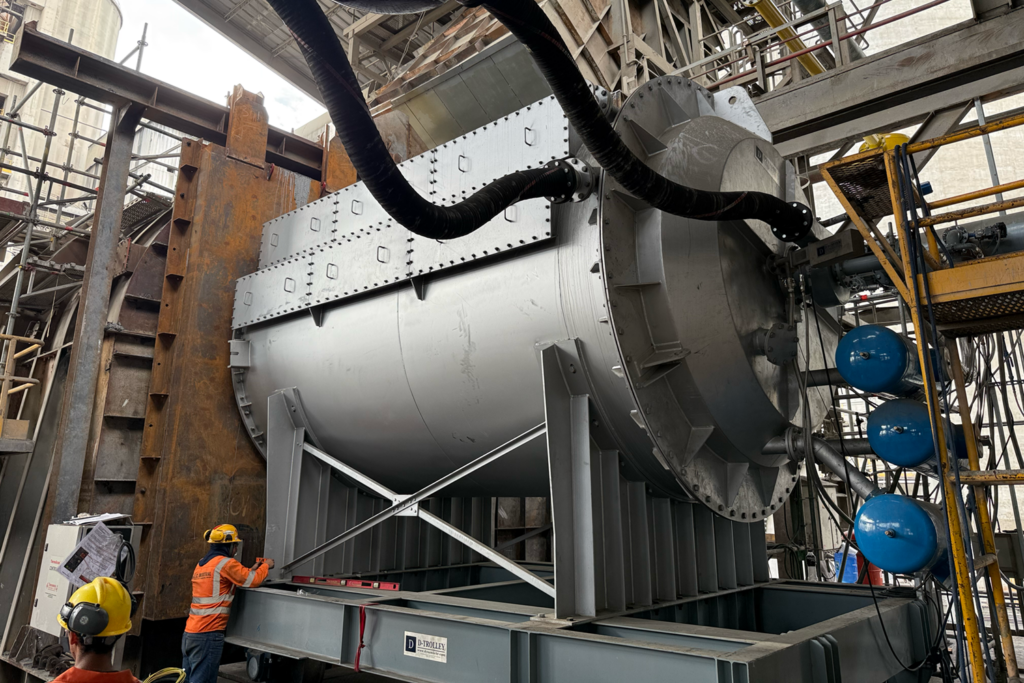
D-Gasifier AFR Pro in operation
The D-FBED Gasifier: Stability as a Concept
The D-FBED Gasifier is a fluidized bed chamber lined with refractory material and filled with sand.
Hundreds of nozzles inject air in the equipment, creating a bubbling regime that ensures intense heat exchange. Solid fuel is conveyed from storage to the dosing system and introduced into the gasifier.
Inside the chamber:
- Hot sand provides immediate heat transfer
- Fuel reacts almost instantly
- Syngas is generated and conveyed to the process
Stability defines the equipment, as hot sand offers significant thermal inertia. This characteristic enables variations in fuel particle size and moisture levels without compromising process stability.
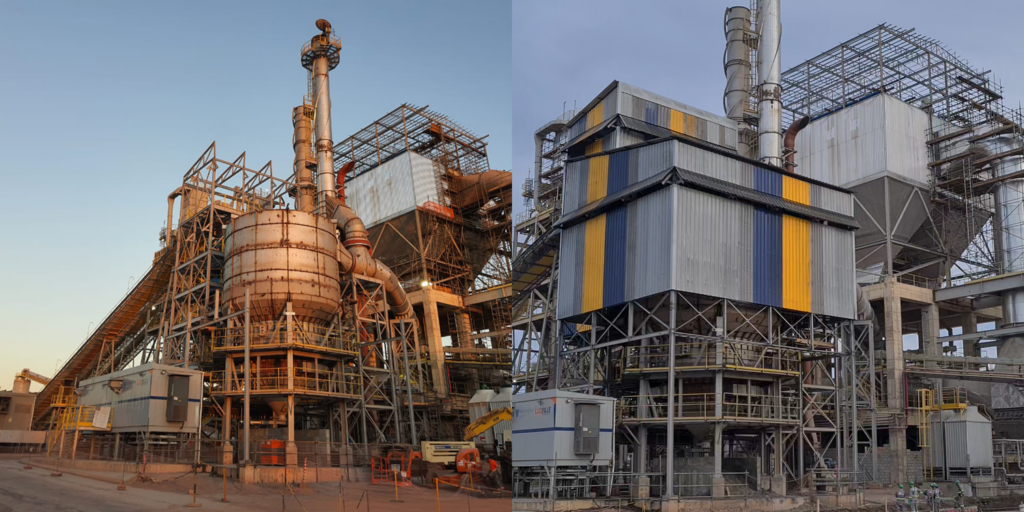
D-FBED model and installation
Maximizing Alternative Fuels
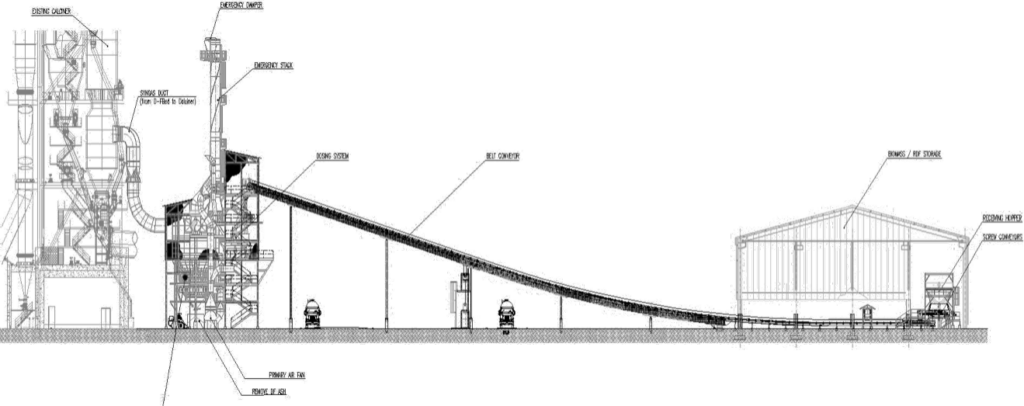
D-FBED Key Technical Advantages:
- Avoids major modifications to calciners
- Easy ground-level installation (reduced downtime)
- Handles fuel particles up to 150 mm
- Handles moisture content up to 30%
- No need for grinding solid fuels
- Same technology for calciner and main burner
- Theoretical target: 100% Thermal Substitution Rate (TSR) even for white clinker kilns
- Low NOx emissions
- No By-Pass
The design of the equipment allows for the retention of ash within the equipment. This feature makes the D-FBed Gasifier an ideal choice for white clinker kilns, as the presence of ash does not impact the color of the clinker.
Chlorine Removal – Gas Cleaning Innovation
A major breakthrough refers to chlorine removal directly inside the fluidized bed. By feeding limestone (CaCO₃) into the bed, acid pollutants such as HCl, SO₂, and HF can be removed and chlorine abatement efficiency might exceed 90%, with a Ca:Cl molar ratio of 3:1.
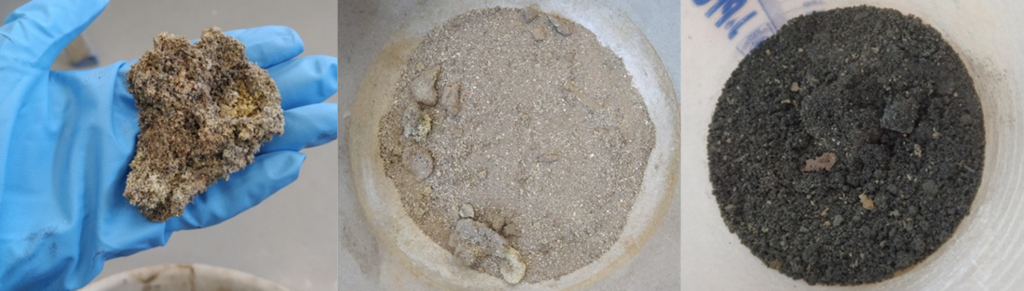
Bed lumps and residue
Chlorine forms lumps that reduce the melting point of the sand. Once melted, chlorine-rich sand lumps are formed. These are separated by means of screening systems: the coarse material (chlorine-rich lumps) is discarded and the fine sand is recirculated in the bed. This allows for a very high TSR without the need for bypass systems.
Proven Industrial References
More than a theory, it is important to reinforce that these are facts.
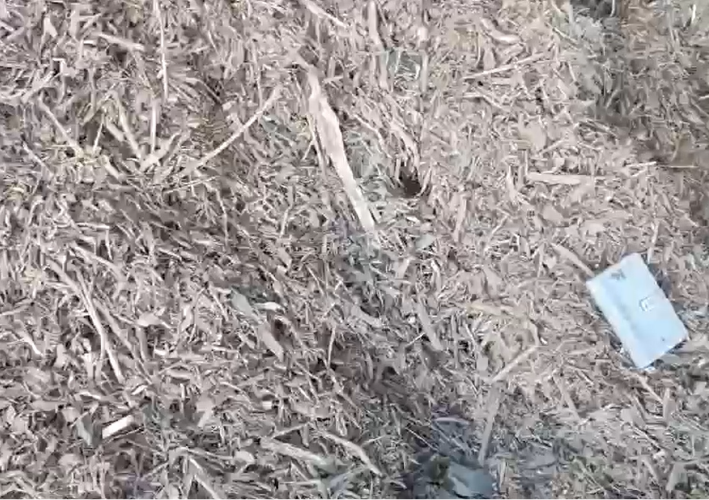
A plant located in Brazil already operates at 100% biomass, handling large fuel particles, often above 200 mm.
A Slovakian project by DYNAMIS is about to increase TSR from 7% to 70%, conveying syngas directly to the main burner, considering white clinker production.
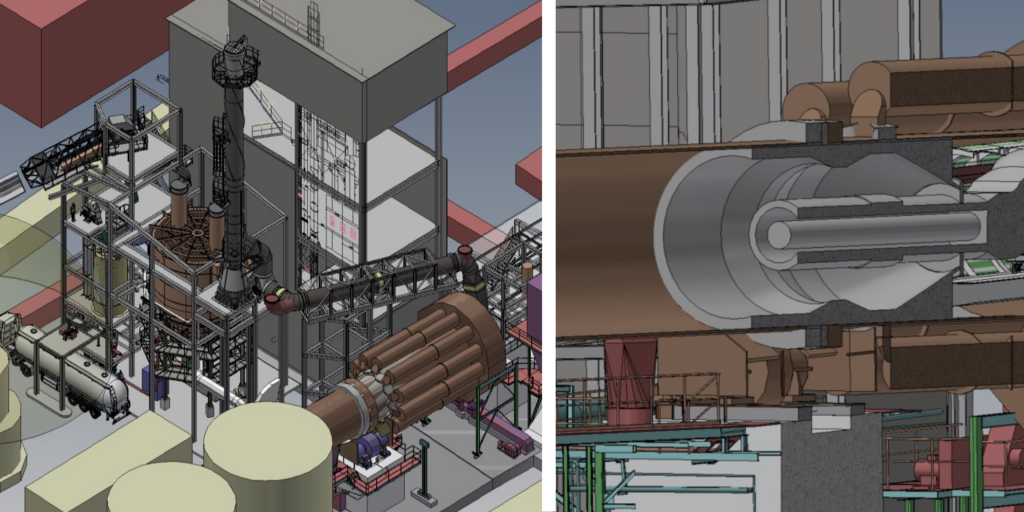
CRH Project in Slovakia
B – Blended Cement – Calcined Clay
Over 2 Decades of Experience
Calcined clay has a special meaning in our history. More than a sustainable solution, it means dozens of projects, decades of references and hard work to continuously offer unique solutions to our clients. Calcined clay means, above all, innovation.
Vicat / Ciplan – Sobradinho, Brazil
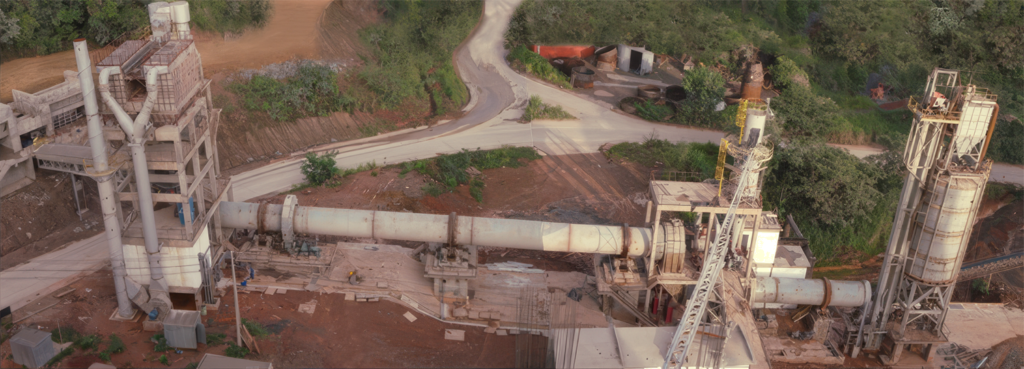
Our First Reference (Commissioned 2009)
- Greenfield plant
- Original capacity: 550 t/d
- After optimization: 700 t/d
- Fuel: Petcoke
- Raw clay: >70% kaolinitic
- 25% moisture (very sticky material)
- Technology: Rotary kiln + rotary cooler + D-Gasifier
- Heat consumption: 550 kcal/kg
More than 16 years of operation confirm the robustness of our approach.
Cementos Argos – Rioclaro, Colombia
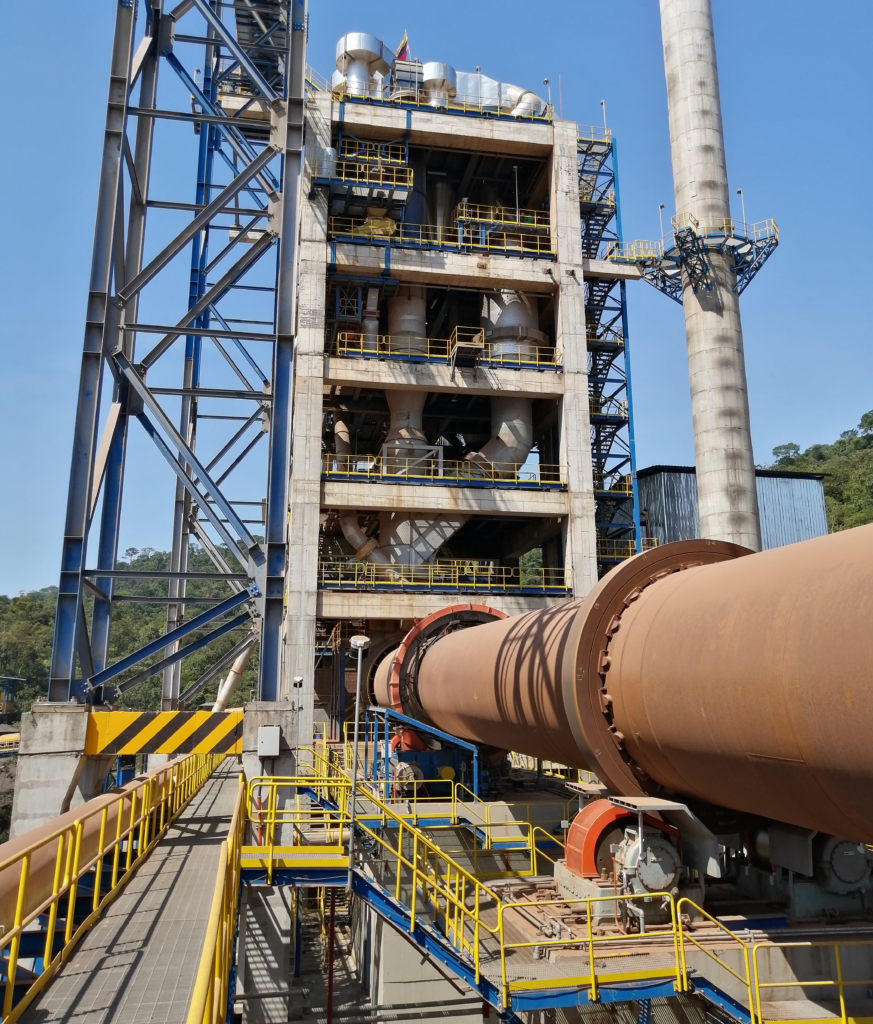
The World’s Largest Calcined Clay Line
Commissioned in 2019.
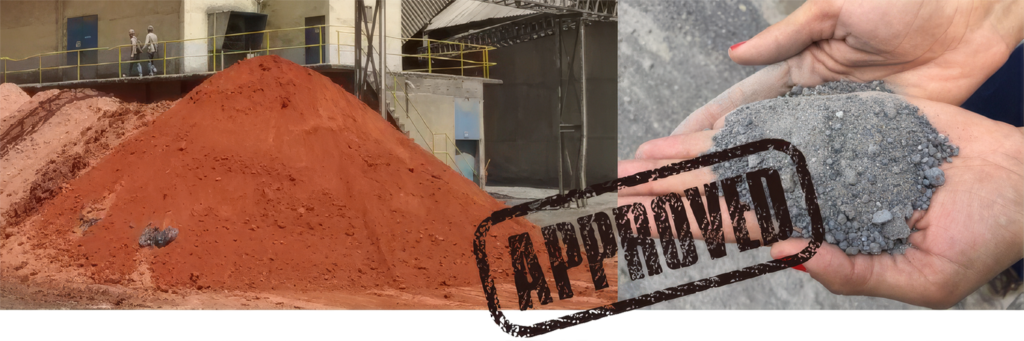
Advanced color control technology
- Capacity: 1,500 t/d
- Hybrid technology: Flash dryer + Rotary kiln + D-Gasifier
- Fuel: Pulverized petcoke and coal
- High iron content clay (10%)
- Advanced color control technology
This was the first large-scale implementation of our color control system, allowing production of consistent, high-quality calcined clay even with challenging raw materials. This project represents innovation combined with scale.
Cimpor / Oyak – Souselas, Portugal
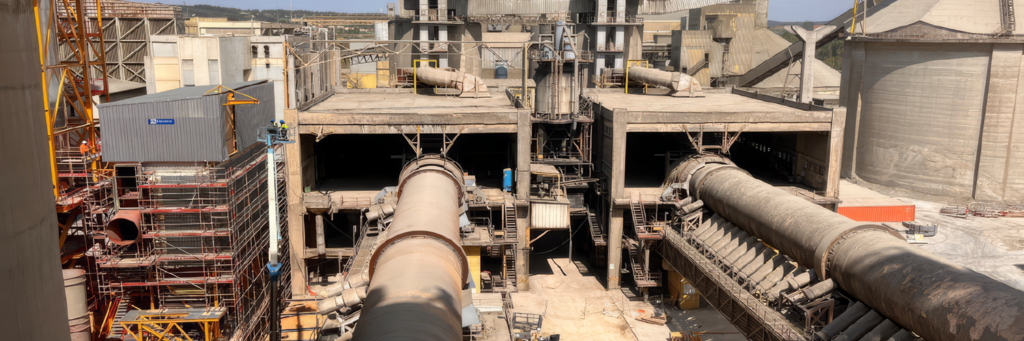
Ongoing Project – Europe’s Largest Line
- Retrofit of existing clinker kiln
- Capacity: 1,500 t/d
- Commissioning: Mid-2026
- Target: 80% TSR
- Fuels: Coal, RDF, Biomass
Key challenges:
- Use of clinker grate cooler to handle fine calcined clay
- High TSR using advanced fuel preparation (A TEC Rocket Mill)
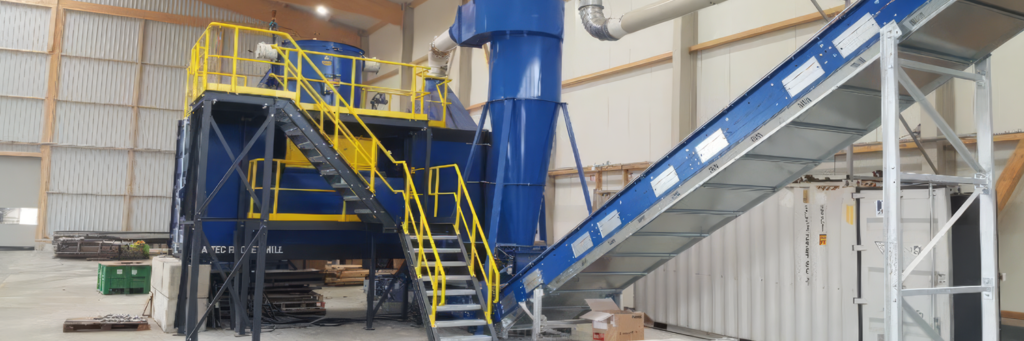
This project demonstrates how existing clinker lines can be converted into calcined clay production units.
Multi-Task Kiln Concept
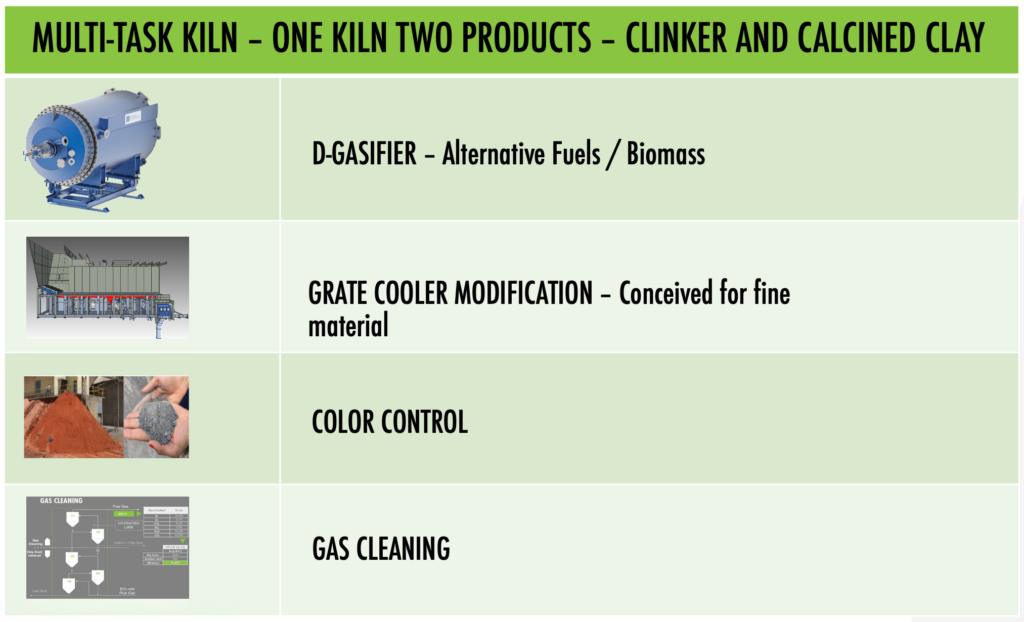
One kiln & two products: part-time clinker and part-time calcined clay. All systems are designed to operate flexibly with both materials. This allows clients to start cautiously by modifying existing assets rather than building entire new lines.
C – Carbon Neutrality
The Mandatory Pathway
Carbon neutrality in cement production requires two simultaneous strategies:
- Maximizing alternative fuels and biomass
- Producing Supplementary Cementitious Materials (SCMs), such as calcined clay
The use of technologies such as the D-Gasifier or D-FBed Gasifier, as well as calcined clay lines represent important paths toward carbon-neutral production and clinker lines that can achieve up to 100% TSR. While the ash retention enables the use in white clinker production, the gas cleaning technology improves environmental performance
The integration of Gasification, Flash calcination, Rotary kiln technology, Alternative fuels, Biomass and SCM production creates a complete roadmap for decarbonization.
Conclusion
The ABC of Carbon Reduction is clear:
- A – Alternative Fuels
- B – Blended Cement – Calcined Clay
- C – Carbon Neutrality
Using high levels of alternative fuels and biomass, combined with SCM production, such as calcined clay is not optional. It is the mandatory pathway for carbon neutrality.
Dynamis offers a complete technological portfolio — from greenfield projects to retrofits and multi-task kiln solutions — backed by more than 20 years of experience and proven industrial references in Brazil, Colombia, Slovakia, and Portugal.